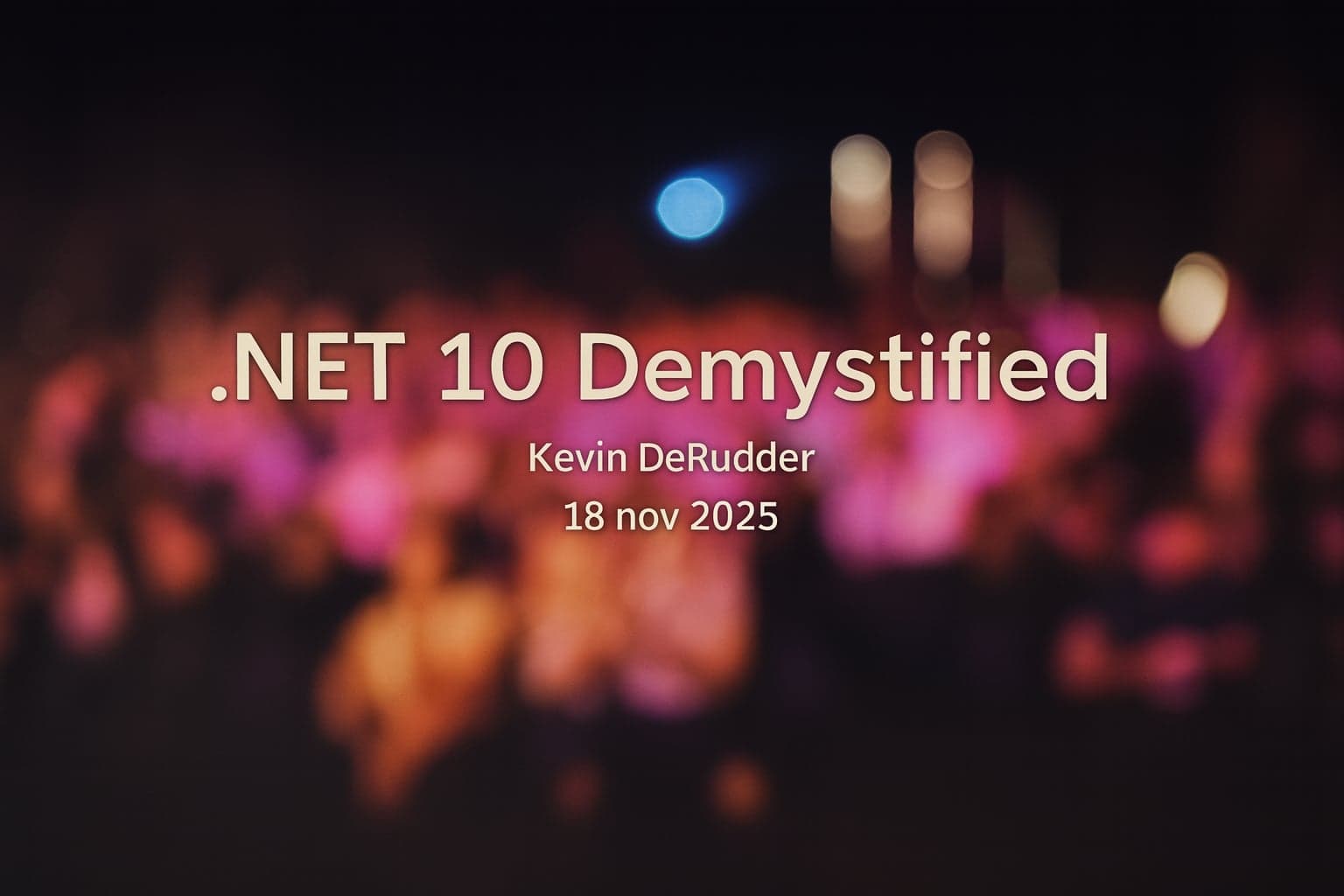
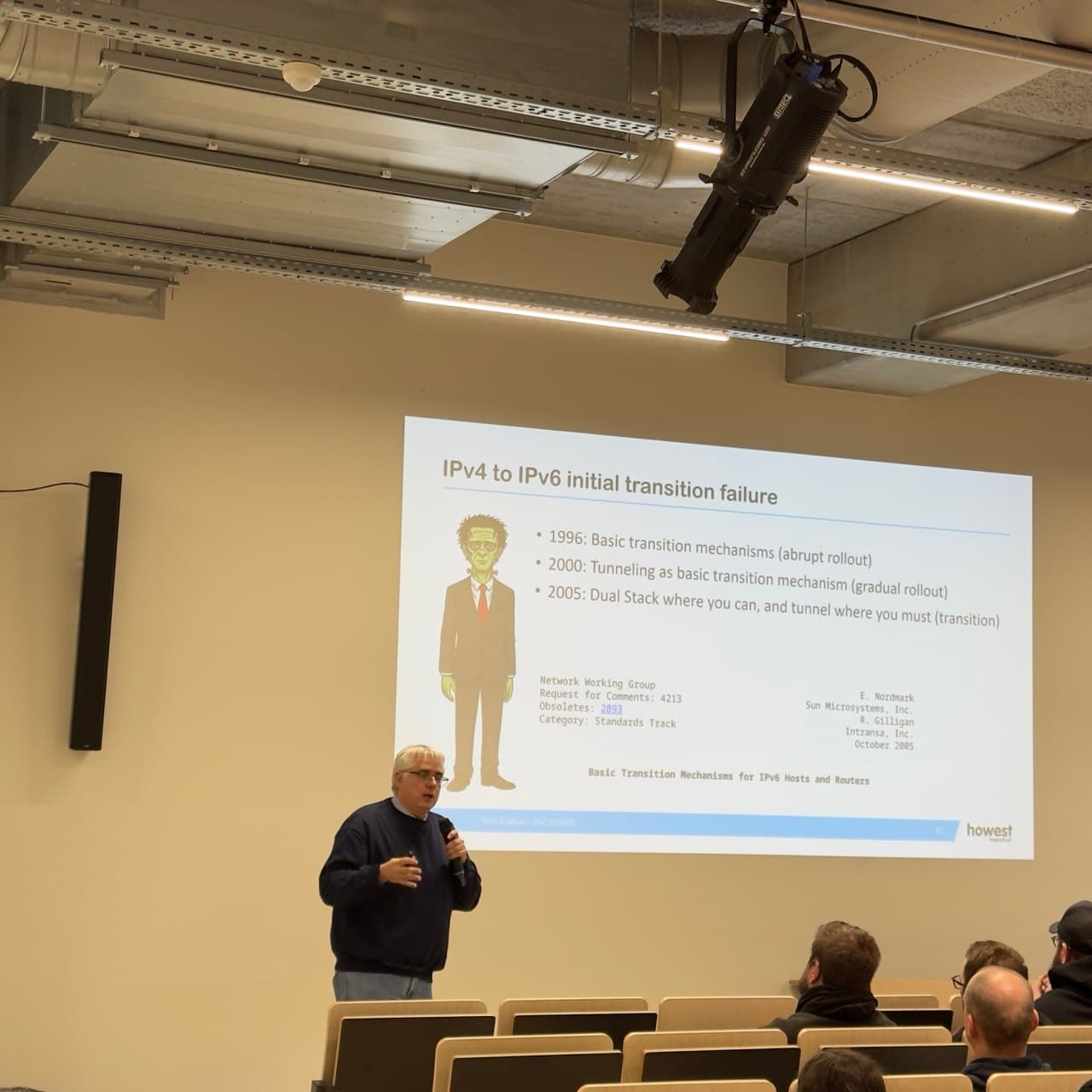
I went to the Howest Tech & Meet session on ".NET 10 Demystified" with Kevin De Rudder. It was a fun evening, plenty of live demos, an easy room, and a developer-focused energy you don't always get at the more theory-heavy talks.
Most of the sessions I show up to are cybersecurity or AI-leaning, so this one was a nice shift in tone. Kevin coded live, walked through realistic examples, and dropped enough small jokes to keep the room engaged. It felt more like watching someone work than sitting through a launch deck.
At a glance
| |
|---|
| Speaker | Kevin De Rudder |
| Topic | .NET 10 Demystified |
| Style | Hands-on, practical, live-coded |
| What stood out | It wasn't a feature checklist, it was advice from someone who actually ships code. |
What he covered
- Live demos over slides, less "here's what's new," more "here's what it looks like in a real project."
- Performance work, improvements that translate into apps that feel smoother and behave more predictably under load.
- C# language tweaks, small, well-placed changes that make code cleaner and easier to read.
- Aspire and Blazor, demos that showed how the .NET ecosystem now hangs together as a single, cohesive story.
- The room, fun moments, decent crowd, easy networking afterwards.
Why this mattered to me as a security professional
A lot of security incidents start upstream of security tools, in messy, hard-to-reason-about code. When a codebase is consistent, when defaults are sensible, and when the runtime behaves predictably, the system gets dramatically easier to operate and defend. Brittle, surprising code is a gift to attackers and a tax on responders.
That's the part that stuck with me: the .NET 10 story isn't only about speed or syntax sugar. It's about reducing the number of footguns developers reach for in the first place.
The takeaway in one line
Better defaults and cleaner patterns mean fewer shortcuts, and fewer shortcuts mean fewer hidden problems waiting to surface during an incident.
What I'm taking home
- Performance ≈ stability. Faster, more predictable systems are also easier to run, observe, and triage.
- The ecosystem feels joined-up. Real apps with less integration friction.
- Clean code ages better. It stays understandable when someone (often you, six months later) needs to fix it under pressure.
- Watching experienced developers think is its own kind of training. Hard to replicate from docs alone.
Big thanks to Kevin and Howest for keeping the session grounded, practical, and genuinely enjoyable.